About the Author

A customer in Tulsa searches for a roofer after a storm. Another in Norman looks for a dentist who is open on Saturday. Another in Lawton wants a local shop that has what they need in stock. Each one picks from the first few businesses Google shows. If yours is not one of them, you never see the call, even though you are right there in town.
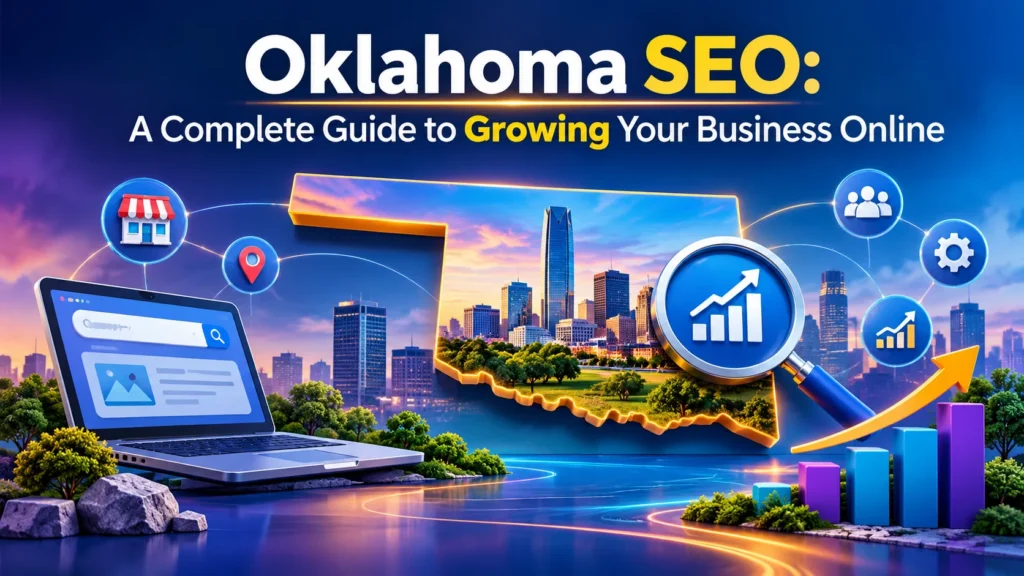
That is the problem Oklahoma SEO is meant to solve. This guide explains what it is, how search works for businesses across the state, and the steps that matter most, in the order that makes sense. It also explains how to measure progress, what mistakes to avoid, and when it is worth getting help.
Quick answer: Oklahoma SEO means improving how your business appears in Google for searches by Oklahoma customers. It combines an accurate Google Business Profile, consistent listings, genuine reviews, a clear website, and local authority. Results take months, and no one can guarantee a ranking.
Key Takeaways
- Start with accuracy. Wrong hours, categories, or phone numbers do more damage than a missing blog post.
- Your Google Business Profile, reviews, and website work together. Fixing one without the others limits the result.
- Oklahoma is not one market. Oklahoma City, Tulsa, college towns, and rural counties search differently, so define your own service area honestly.
- AI summaries are growing, but Google says no special optimization is required to appear in them. The same fundamentals apply.
- SEO is slow. Google publishes no timeline, so measure monthly and judge over a quarter or more.
- Compare scope, not just price, when you evaluate an SEO provider, and be careful with anyone who guarantees rankings.
What Is Oklahoma SEO?
Oklahoma SEO is the practice of improving your business’s visibility in search engines, mainly Google, so that customers in Oklahoma can find, trust, and contact you. It covers local results on Google Maps, regular organic results, and increasingly AI-generated answers.
Search engine optimization has three broad parts. On-page SEO is what you do on your own website: clear pages, useful content, and good titles. Technical SEO is what helps search engines crawl and understand the site. Off-page SEO is the trust signals that come from elsewhere, such as reviews, mentions, and links.
For most Oklahoma businesses, the first priority is local SEO, because customers search for things like “dentist near me” or “plumber in Edmond.” An online store, by contrast, may care more about product pages and organic search across the country. The right mix depends on how you actually reach customers.
Why Oklahoma Businesses Need SEO
SEO matters because most Oklahoma businesses compete with many nearby alternatives, and customers choose quickly from what they see first.
The state is a small-business economy. The U.S. Small Business Administration’s Office of Advocacy reports that Oklahoma had 395,520 small businesses in its 2025 profile, which is 99.4 percent of the state’s businesses. Those businesses employed 706,906 people, or 50.8 percent of Oklahoma employees. The profile draws on Census data from 2022. It does not say how many of these businesses compete for customers online, but the scale shows how crowded many markets are.
How people see results is also changing. A Pew Research Center study of March 2025 browsing data from 900 U.S. adults found that people clicked a traditional search result in 8 percent of visits when an AI summary appeared, compared with 15 percent when one did not. About 18 percent of the searches in the study produced a summary. This is national data and it is not limited to local searches, so treat it as a signal, not a forecast for your town. The practical lesson is that your name, profile, and reviews may have to do the persuading before anyone visits your website.
How Search Works: Local, Organic, and AI Results
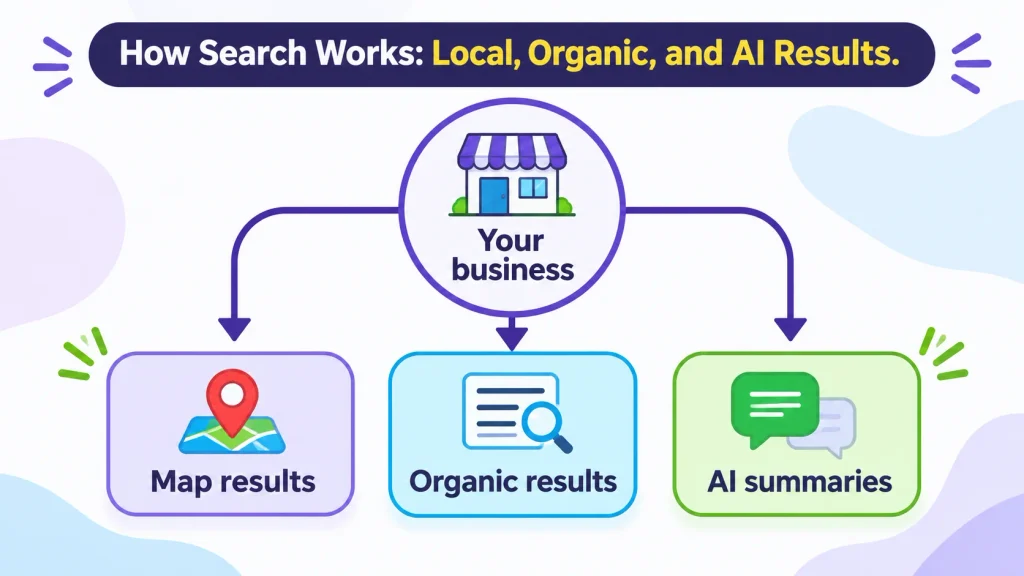
Customers can meet your business in three places: the local map results, the regular organic results, and AI-generated summaries. Each draws on much of the same information about you.
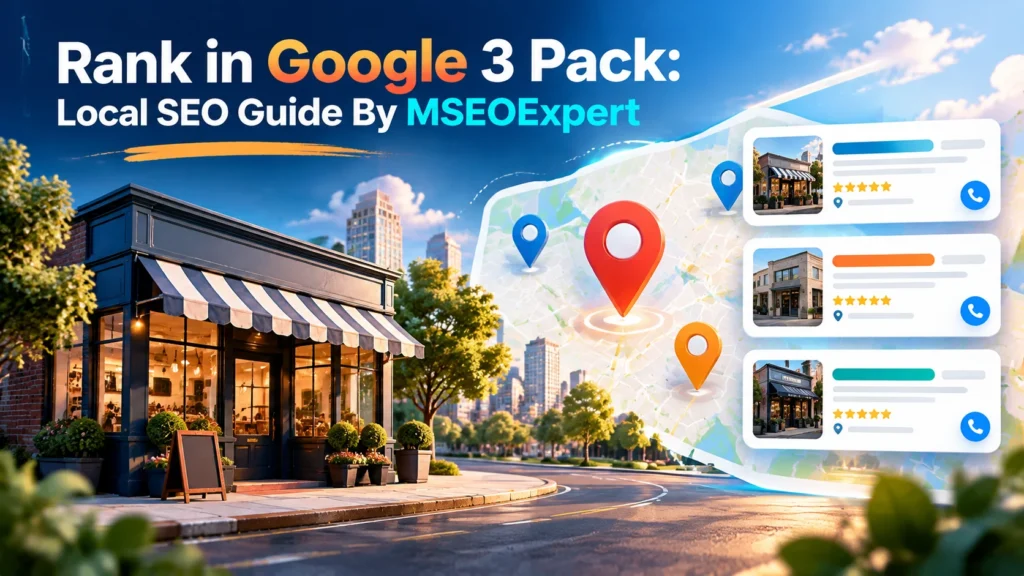
Local results. For searches with local intent, Google often shows a map and a short list of businesses. Google says local results are mainly based on relevance, distance, and prominence, and that you cannot pay for a better local ranking. Relevance is how well your profile matches the search. Distance is how far you are from the searcher. Prominence is how well-known your business is, which can include reviews and mentions across the web. You cannot change your address, so effort goes into relevance and prominence. Our guide on how to rank in the Google 3-pack goes deeper on the map results.
Organic results. These are the standard links below or beside the map. They depend on your website’s content, structure, and authority.
AI results. Google’s documentation on AI features in Search says its standard SEO practices still apply and that there are no extra requirements or special optimizations to appear in AI Overviews. A page must be indexed and eligible to show with a snippet, and Google says traffic from these features is counted in the Search Console performance report. Other AI tools have their own sources, and none of them publishes a formula for which businesses it names. Anyone who promises you a place in AI answers is guessing.
Oklahoma’s Search Landscape: Metros, Small Towns, and Service Areas
Oklahoma includes large metros, college towns, mid-sized cities, and wide rural areas, and each calls for a slightly different approach.
Oklahoma City and Tulsa have the most competition for terms like “dentist,” “roofer,” or “attorney.” In those markets, small differences in reviews, categories, and page quality can decide who appears. Norman, Edmond, Broken Arrow, Lawton, and other cities have their own, smaller sets of competitors, and customers there often search with the city name.
Rural and small-town businesses face a different challenge. Customers may search for the nearest town, a county, or a region, and the business may serve several of them. This is where a realistic service area matters. Listing a huge territory you cannot serve can create trust and policy problems, so describe the places you actually reach.
These are practical observations based on how local search works, not Oklahoma-specific survey data.
Seasonal and event-driven demand
Some businesses see demand rise and fall with events or weather. A roofing company, for example, may see more searches after storms, and a restaurant may see more after a local event. Keep your hours, services, and pages current before those periods, and check what customers asked for last time.
Step 1: Audit Where You Stand Today
Before you change anything, record where you are now. A baseline lets you tell later whether the work helped.
- Search your business name and city in Google and Google Maps. Check that the name, address, phone, and website are correct.
- Search for your main service and city in a private browser window, and repeat from another neighborhood you serve. Results change by location.
- Confirm your Google Business Profile exists, is claimed, and is verified.
- Look for duplicate or old listings. Our guide on fixing duplicate Google Business listings explains how to approach them.
- Note your review count, average rating, and the date of your newest review.
- List your three closest competitors and compare their categories, reviews, and website pages.
- Record last month’s calls, direction requests, and website visits from your profile and analytics.
If your business is not appearing at all, start with our guide on why a business isn’t showing in Google’s local pack.
Step 2: Build Your Google Business Profile Foundation
Your Google Business Profile is often the first thing a nearby customer sees. Accuracy and completeness come before anything fancy.
Google says complete and accurate information makes a business more likely to appear in local results, and that verification shows you are authorized to manage it. Our Google Business Profile optimization guide and checklist cover each field in detail.
Categories, services, and details
In a 2026 survey of 47 local SEO specialists, Whitespark found that experts rate the primary category as the top local pack factor. That is expert opinion, not Google’s formula, but it shows where specialists put their attention. Choose the most specific primary category that matches how you earn most of your revenue, and add secondary categories only for services you really offer. Our guide to Google Business Profile categories explains how.
Use your real business name, with no added keywords. Set accurate hours, including holidays. Add every service you actually provide, using the words customers use.
Photos, posts, and service areas
Upload real photos of your location, team, and work. Posts are useful for offers and updates, but experts in the same survey rank posting frequency low as a ranking factor, so do not let it crowd out higher-impact work. If you want to post, our guide on Google Business Profile posts shows what to include.
If customers do not visit your address, hide it and list a realistic service area instead. Do not use a virtual office or a mailbox as your location.
Pro Tip: Keep one master document with your approved name, address, phone, hours, and description. Paste from it into every profile, listing, and web page. It prevents accidental mismatches and makes unwanted edits easy to spot.
Step 3: Clean Up Your Citations and NAP
Citations are mentions of your business name, address, and phone number (NAP) on other sites. Consistent details help search engines and customers trust that your business is real and correct.
Old addresses, previous phone numbers, and duplicate listings are common in Oklahoma because businesses move, rebrand, and change owners. Start with the basics in our guide on what local citations are, then audit what already exists using our local citation audit guide.
Fix the highest-impact errors first: the main map and search platforms, your industry’s key directories, and any listing with an old phone number. Our NAP consistency guide explains how to format your details everywhere.
Quality beats quantity. A handful of correct, relevant listings is better than dozens of random ones. If you are deciding whether to do this yourself or pay for help, see free versus paid citation building, and our guide on how to build local citations when you are ready to start.
Step 4: Earn and Manage Reviews
Reviews help customers decide and help Google judge prominence. Google says more reviews and positive ratings can help your local ranking, so a steady, honest review habit is worth building.
In the same Whitespark survey, rating, review count, review recency, and a steady flow of new reviews all rank among the top factors for the local pack. That is expert opinion, but it fits what Google says. The practical point is consistency: a steady trickle looks healthier than a burst followed by silence.
Build a simple process:
- Ask every customer after a completed job, visit, or purchase, while the experience is fresh.
- Send your direct Google review link by text or email so it takes one tap.
- Reply to every review, good or bad, with a specific, polite answer.
- Never pay for reviews, offer rewards, or ask only happy customers. That breaks Google’s review policies and can put your profile at risk.
Healthcare and legal practices should be careful not to reveal private client information in replies.
Step 5: Make Your Website Match Local Searches
Your website should explain what you do, where you do it, and how to contact you, so that both customers and search engines understand it quickly.
Service and location pages
Give each main service its own page with plain, useful details. A plumbing company might have separate pages for water heaters, drain cleaning, and emergency repairs. Create a page for a specific city or neighborhood only when you have real information to put on it, such as the areas you serve, typical jobs, and local details. Copying one page across dozens of towns with the name changed adds little value and can look thin.
Point your Google Business Profile to the page that best matches the search, usually your homepage for a single location or a dedicated location page if you have several. Our guide to Google Business Profile versus website SEO explains how the two work together.
Technical basics
Technical SEO helps search engines reach and understand your pages. The essentials for most local sites are simple:
- The site works well on a phone and loads quickly.
- Important pages are indexed and not blocked by a robots.txt file or a security plugin by mistake.
- Titles and headings are clear, and pages link to each other logically.
- Contact details and hours on the site match your profile.
Google says it does not require special markup to appear in its AI features. Structured data can still help describe your business, but it should match the text visitors see on the page.
Step 6: Build Local Authority and Links
Authority comes from real mentions and links by organizations that know you. A few relevant ones are worth more than many random ones.
Think about who already knows your business: your chamber of commerce, trade associations, suppliers, community groups, local news, and sponsorship partners. A listing, mention, or link from those sources helps customers find you and shows search engines that you are part of the community.
Do not buy links or join link networks. Google treats paid or manipulative links as a policy problem, and the risk outweighs the benefit. Choose directories that actually matter for your industry. Our guides to industry-specific citation sites and the best local citation sites in the USA can help you decide where to start.
SEO for Oklahoma Industries
Different industries are chosen for different reasons, so the same steps get different emphasis. Here is how that works for four common groups.
Home services and contractors
Roofers, HVAC companies, plumbers, and electricians are often chosen in a hurry. Accurate categories, a realistic service area, clear service pages, and fast contact options matter most. MSEOExpert’s contractor SEO in Oklahoma page describes how this work is approached.
Healthcare and dental practices
Patients choose on location, ratings, and trust. Practices need accurate profiles for each location and practitioner, clear treatment pages, and careful review handling that respects privacy. See MSEOExpert’s pages on healthcare SEO in Oklahoma and dental SEO in Oklahoma. Medical wording should always be checked by your clinical team.
E-commerce stores
Online stores depend more on product and category pages, site structure, and technical health than on map results, unless they also have a physical shop. See e-commerce SEO in Oklahoma for how that differs.
Multi-location businesses
Each real location needs its own correct profile, page, hours, and phone number, plus a clear owner for updates. Our guide on Google Business Profile for multiple locations explains the setup. If you also serve customers outside Oklahoma, MSEOExpert’s national local SEO services page covers that scope.
How Long Does Oklahoma SEO Take, and How Do You Measure It?
Google publishes no official timeline, so any exact promise is a guess. Plan to judge results over several months, not days.
Some changes, such as a corrected phone number, can appear quickly. Others, such as reviews, authority, and new pages, take longer. The pace depends on competition, your starting point, and how consistently the work continues. Treat the first 90 days as a time to fix foundations and gather data, then compare trends.
Track these every month:
- Business Profile performance: calls, direction requests, and website clicks.
- Google Search Console: impressions, clicks, and the pages and queries that bring visits. Google says traffic from its AI features is included in the overall report.
- Your analytics: visits to service pages, form submissions, and bookings.
- Visits from AI tools: look for referrals from AI sites, but remember many people read an AI answer and never click, so this will undercount.
- Customer feedback: ask new customers how they found you.
Check your profile often, because details can change. Our guide on how often to update your Google Business Profile gives a practical schedule.
Common Oklahoma SEO Mistakes and Risks
Most serious problems come from misrepresenting your business or expecting shortcuts, not from missing polish.
| Mistake | Why it is risky | Do this instead |
|---|---|---|
| Adding keywords or city names to the business name | Violates Google’s guidelines and can lead to suspension | Use your real-world name |
| Using a virtual office or mailbox as your address | Misrepresents where you operate | Use a real location, or hide the address if you are service-area only |
| Ignoring duplicate listings | Splits reviews and signals | Decide which listing is real, then merge or remove the rest |
| Buying or incentivizing reviews | Policy violation and loss of trust | Ask real customers, all of them |
| Claiming a service area far larger than you serve | Looks misleading and can cause problems | List the areas you really reach |
| Copying one page across many towns | Thin, repetitive content | Write pages only where you have real information |
| Leaving profile attributes and details incomplete | Customers lack information | Complete them using our attributes guide |
| Expecting results in days | Leads to wasted spend and quick changes of plan | Plan for months and measure trends |
If a profile is suspended, follow Google’s official reinstatement process and keep proof of your real business details ready. Our suspension guide covers the basics.
DIY or Hire an Oklahoma SEO Company?
Many owners can do the foundations themselves. Hiring makes sense when time, competition, or technical complexity gets in the way.
| Factor | Doing it yourself | Hiring a provider |
|---|---|---|
| Time | You carry the workload | The provider carries most of it, with your approvals |
| Cost | Your time and any tools | Monthly fees, set by scope |
| Expertise | You learn as you go | Experience across many cases |
| Risk | Easy to make avoidable mistakes | Depends on provider quality and honesty |
| Speed of setup | Slower at first | Usually faster to organize |
If you decide to hire, MSEOExpert is an SEO agency that serves US businesses, including those in Oklahoma. Its Oklahoma SEO services page describes the local, technical, and content work it offers, and its Local SEO for Oklahoma page focuses on profile and map visibility.
Strategic insight
This is our reasoned view, not Google’s: fix accuracy and eligibility first, then relevance, then proof, then engagement. Many businesses spend money on posting schedules or extra pages while their category is wrong or their listings disagree. Paying for activity is not the same as paying for progress, so ask what each task is meant to fix.
What to ask any provider
- What exactly is included each month, and what is not?
- Who does the work, and who is my contact?
- How long is the contract, and how do I cancel?
- What will your reports show, and what will they not show?
- What proof can you share, and is it authorized for use?
- Do you guarantee rankings? (Be careful if the answer is yes. Google says rankings cannot be bought.)
A 90-Day Oklahoma SEO Action Plan
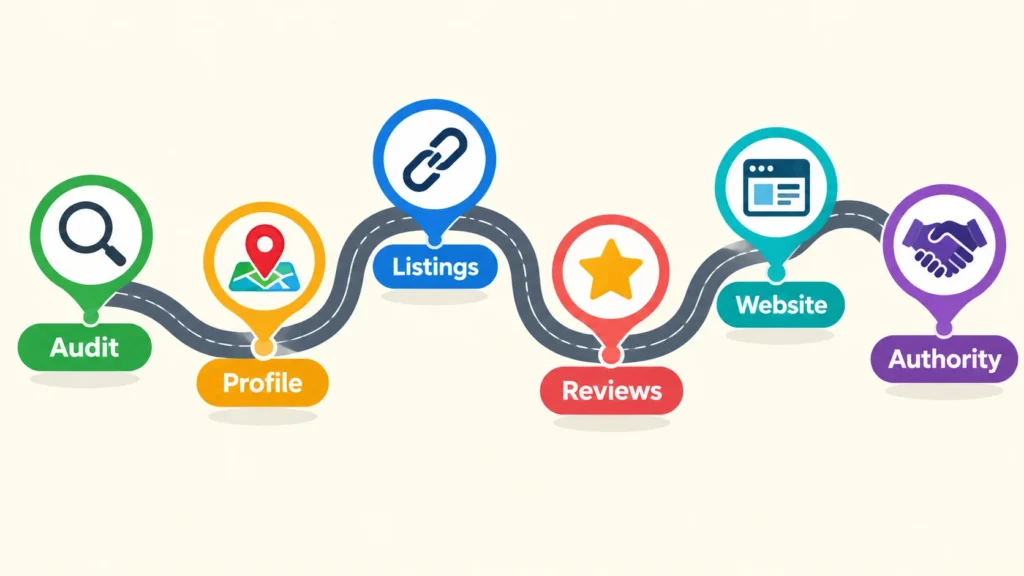
Use this plan as a starting point. It describes activities, not guaranteed outcomes.
Hypothetical example, not a client result: imagine a roofing company in Tulsa. Its profile uses a broad contractor category, its hours do not match its website, it has one general services page, and its newest review is a year old. The plan below would address exactly those problems in order.
Month 1: Audit and fix accuracy
- Complete the audit in Step 1 and record your baseline.
- Verify and correct your Google Business Profile: category, hours, services, and service area.
- List every duplicate and outdated listing and fix the most important ones.
- Match your name, address, and phone number on your website and top directories.
Month 2: Build relevance and proof
- Create or improve one page for each main service.
- Start your review-request process and reply to existing reviews.
- Add real photos and update your services list.
- Check mobile speed and indexing basics.
Month 3: Measure and decide
- Review profile, Search Console, and analytics trends against your baseline.
- Compare your profile, reviews, and pages with your top three competitors again.
- Add local mentions and links from relevant organizations.
- Decide what to continue, change, or hand to a provider.
Frequently Asked Questions
What is Oklahoma SEO?
Oklahoma SEO is the work of improving how your business appears in Google for searches by Oklahoma customers. It covers your Google Business Profile, listings, reviews, website, and local authority, and increasingly how AI summaries describe your business.
How much does SEO cost in Oklahoma?
Costs depend on your goals, competition, number of locations, and the work required. I did not find a verified Oklahoma-specific price figure, so be cautious with any single number. Ask each provider for a written scope and compare what is included, not just the monthly fee.
How long does SEO take to work?
Google gives no official timeline. Simple fixes can show quickly, while reviews, authority, and new pages take longer. Plan to judge progress over several months, compare trends against your baseline, and be wary of anyone who promises results by a date.
Do I need an Oklahoma address to rank locally?
A verified location or a properly defined service area helps. Service-area businesses can hide their address, but they still need to serve customers in person and describe where they work accurately. Online-only businesses generally cannot use a virtual office to appear in a city.
Is SEO different in Oklahoma City, Tulsa, and rural areas?
Yes, in degree. Large metros have more competition, so small differences in reviews and pages matter. Smaller towns and rural areas often depend on a realistic service area and clear listings. The fundamentals stay the same, but the competitors and search terms differ.
Do Google reviews help my ranking?
Google says more reviews and positive ratings can help local ranking, and reviews also help customers decide. Ask every customer for honest feedback, reply to each review, and never buy or incentivize reviews. A steady flow of recent reviews is better than a burst.
Does AI search change SEO for Oklahoma businesses?
It changes where customers see you, but not the basics. Google says no special optimization is needed for AI Overviews, and that normal SEO practices apply. Accurate details, helpful pages, and genuine reviews help in both places. No one can guarantee an AI mention.
Can customers still ask questions on my Google profile?
Press reports in December 2025 said Google is replacing the public Q&A section in Maps with an AI-powered feature. Because details may keep changing, put your most common customer questions and answers on your own website and keep your profile information complete.
Should I hire an Oklahoma-based SEO company?
Local knowledge can help, but a physical office is not a ranking factor on its own. Judge providers by their scope, process, reporting, and proof. Ask how they handle Oklahoma’s different markets, and be careful with anyone who guarantees rankings.
What can I do myself today?
Search your business, verify and complete your Google Business Profile, match your name, address, and phone everywhere, ask recent customers for reviews, and check that your website works on a phone. Those steps cost little and cover most of the foundation.
Where should a new Oklahoma business start?
Start with eligibility and accuracy: a verified profile, the right category, correct hours, and a simple website with one page per service. Then build a review process. New businesses have little history, so expect the first months to focus on foundations.
Conclusion
Oklahoma SEO works when you do the basics in the right order: an accurate Google Business Profile, consistent listings, honest reviews, a clear website, and local authority. Then measure monthly and give the work time. No one controls Google’s results, and no honest provider promises them.
If you would like an outside view of where your business stands, you can request an SEO audit from MSEOExpert and get a clear list of what to fix first.